
Estate Planning Lawyer Marketing
The Ultimate Guide to Growing Your Practice in 2026

Written by: Rahul Mulchandani
Founder, Digital Marketing Strategist and
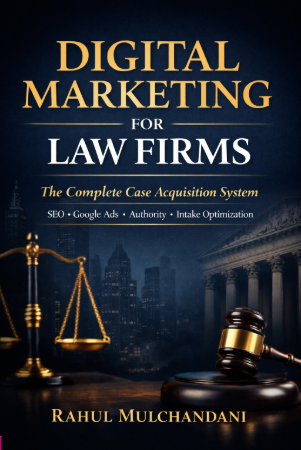
Author of "Digital Marketing For Lawyers" Book
Written by: Rahul Mulchandani
Founder, Digital Marketing Strategist and Author of "Digital Marketing For Lawyers" Book
Table of Contents
If you practice estate planning law, you already know the work is meaningful — helping families protect their assets, write wills, set up trusts, and plan for the future. But meaningful work does not automatically fill your calendar. Estate planning lawyer marketing is how you connect your expertise with the people who need it most.
Analyze this Estate Planning Lawyer Marketing content with AI tools:
ChatGPT Perplexity Grok Google AI ClaudeThe challenge is real. Most attorneys graduate with no training in marketing. The legal industry is also highly regulated, with state bar advertising rules governing what you can and cannot say. At the same time, competition has intensified dramatically — large national online will services like LegalZoom and Trust & Will compete for your prospective clients’ attention before they even think to call a local attorney.
This guide cuts through the noise. You will learn exactly how estate planning law firm marketing works, which channels produce the best return, how to build a digital presence that earns trust, and how to turn website visitors into signed retainer agreements. Every strategy here is grounded in how real estate planning clients search for and choose an attorney.
What Is Estate Planning Lawyer Marketing?
Estate planning lawyer marketing is the process of attracting and converting clients seeking wills, trusts, and probate services through SEO, local search, content marketing, referrals, and paid advertising.
Estate planning lawyer marketing refers to all the activities an attorney or law firm uses to attract prospective clients, build professional credibility, and generate new business in the areas of wills, trusts, probate, powers of attorney, healthcare directives, and related services.
Unlike criminal defense or personal injury law — where clients often need help urgently — estate planning is a considered purchase. Prospects may spend weeks or months researching before they call. This fundamentally shapes what marketing works and what does not.
Effective estate planning attorney marketing must accomplish three goals simultaneously: generate awareness among people who have not yet thought about estate planning, educate prospects who are researching their options, and convert interested prospects into paying clients through trust-building touchpoints.
The Unique Challenges of Marketing for Estate Planning Attorneys
Several factors make estate planning lawyer marketing different from other practice areas. First, people procrastinate. Studies consistently show that fewer than half of American adults have a will, even though most say they intend to get one. This means much of your marketing must serve an educational function — creating urgency around planning while remaining sensitive and empathetic.
Second, the topic is emotionally charged. Conversations about death, incapacity, and family conflict are uncomfortable for many people. Marketing that feels clinical or pressure-driven can backfire. The most effective estate planning marketing balances practical information with genuine compassion.
Third, state bar rules on attorney advertising vary by jurisdiction. Rules governing testimonials, case results, and the use of words like ‘specialist’ differ across states. Always review your state’s Rules of Professional Conduct and any applicable advertising guidelines before publishing marketing materials.
Understanding Your Target Client for Estate Planning Marketing
Every strong estate planning law firm marketing strategy begins with a deep understanding of who your ideal client is. The demographics vary widely depending on your practice focus.
General estate planning clients are often between 35 and 65 years old. Younger clients in their 30s may need basic wills and beneficiary designations after having children. Clients in their 40s and 50s often need comprehensive trust planning as their wealth grows. Clients in their 60s and beyond frequently need Medicaid planning, elder law guidance, and probate assistance.
Client Personas for Estate Planning Attorneys
Developing specific client personas helps you tailor your messaging. Consider three common personas:
- The New Parent (ages 30-40): Recently married or just had a child. Motivated by the need to name a guardian and ensure their family is protected. Often searching Google for ‘how to make a will’ or ‘naming a guardian for my child.’
- The Pre-Retiree (ages 55-65): Approaching retirement with significant assets. Concerned about taxes, probate, and protecting the surviving spouse. Likely to respond to messaging about trusts, tax planning, and family legacy.
- The Adult Child (ages 40-60): Helping an aging parent with estate planning after a health scare or diagnosis. Searching for elder law attorneys, Medicaid planning help, or guidance on powers of attorney.
Understanding these personas lets you create targeted content, choose the right advertising platforms, and tailor your intake process to address what each group actually cares about most.
Building a High-Converting Law Firm Website
Your website is the center of your estate planning lawyer marketing ecosystem. Every other channel — Google Ads, social media, referrals — eventually sends traffic back to your website. If that website fails to convert visitors into inquiries, every other marketing dollar you spend is partially wasted.
A high-converting estate planning law firm website is not simply a digital brochure. It must answer three questions for a visitor within the first ten seconds: Who are you? Do you handle my specific situation? How do I take the next step?
Essential Elements of an Estate Planning Attorney Website
- Clear headline on the homepage stating what you do and who you serve (example: ‘Helping California Families Protect What They’ve Built Through Wills, Trusts, and Estate Planning’)
- Attorney bio with professional photo, credentials, bar admissions, and years of experience — this builds personal trust
- Service pages for each practice area: last will and testament, revocable living trusts, powers of attorney, healthcare directives, probate administration, Medicaid planning, business succession
- Location-specific pages if you serve multiple cities or counties
- A prominent and simple contact form plus a click-to-call phone number
- Client testimonials and, where permitted by your state bar, reviews
- A blog or resource center with educational articles
- Fast load speed (under 2.5 seconds), mobile-responsive design, and SSL security certificate
Page load speed deserves special attention. Google uses Core Web Vitals as a ranking signal, and slow websites also lose clients directly — studies show that 53% of mobile visitors leave a page that takes more than three seconds to load. Work with a developer who understands both legal website design and technical SEO.
Get More Clients for Your Law Firm
Stop losing potential cases to competitors. Let’s build a strategy that brings you consistent, high-quality leads.
Local SEO for Estate Planning Attorneys
Local SEO for estate planning attorneys helps your firm appear in Google search results and map listings when potential clients search for lawyers in your area.
Local search engine optimization is probably the single highest-ROI marketing channel for most estate planning attorneys. When someone searches ‘estate planning attorney near me’ or ‘will lawyer in [city],’ Google shows a combination of Google Business Profile listings (the map pack) and organic website results. Appearing prominently in both dramatically increases your firm’s visibility.
Google Business Profile Optimization
Your Google Business Profile (GBP) is free and essential. A fully optimized profile includes your firm’s name, address, phone number, website URL, business hours, categories (use ‘Estate Planning Attorney’ as the primary category), and a thorough description of your services and geographic focus areas.
Post updates to your GBP at least twice a month. Share blog posts, answer common questions using the Q&A feature, and respond to every review — positive and negative — professionally and promptly. Google factors engagement signals into local rankings.
On-Page SEO for Estate Planning Websites
Each page on your site should target a specific keyword that a potential estate planning client would actually search. Keyword examples include: ‘estate planning attorney [city],’ ‘living trust lawyer [city],’ ‘probate attorney [county],’ ‘Medicaid planning attorney [state],’ and ‘how to avoid probate in [state].’
Place your primary keyword naturally in the page title tag, the H1 heading, the first paragraph, at least two to three subheadings, image alt text, and the meta description. Write at a level your clients can understand — Google’s algorithms have become highly sophisticated at rewarding content that genuinely helps readers, not content that just repeats keywords.
Building Local Citations and Backlinks
Citations — mentions of your firm’s name, address, and phone number on third-party directories — reinforce your local SEO signals. Ensure your NAP (name, address, phone) is consistent across Google, Yelp, Avvo, Justia, FindLaw, Lawyers.com, your state bar directory, and any local business directories. Inconsistent NAP data confuses Google and can suppress your rankings.
Backlinks from authoritative local and legal websites also strengthen your domain authority. Contribute articles to local news outlets, write guest posts for financial planning blogs, join your county bar association and participate actively (most bar websites link to member profiles), and sponsor local community organizations that link back to your site.
Content Marketing and Thought Leadership for Estate Planning Lawyers
Content marketing is the practice of creating genuinely useful articles, guides, videos, and other resources that answer your prospective clients’ questions — and in doing so, build the trust and credibility that drives them to hire you rather than a competitor.
For estate planning attorneys, content marketing is particularly powerful because the topic requires education. Most people do not fully understand the difference between a will and a trust, what probate actually involves, or why they might need a durable power of attorney. The attorney who explains these concepts clearly, online, for free, becomes the obvious choice when the prospect is finally ready to move forward.
Blog Topics That Attract Estate Planning Clients
- ‘Do I Need a Will or a Living Trust?’ — one of the most common questions searched by estate planning prospects
- ‘What Happens If You Die Without a Will in [State]?’ — state-specific articles rank well locally and address high-anxiety topics
- ‘How to Protect Your Home from Medicaid Recovery’ — highly targeted to adult children researching elder law
- ‘How Much Does Estate Planning Cost?’ — cost transparency builds trust and attracts ready-to-buy searchers
- ‘Estate Planning Checklist: What Documents Do You Need?’ — great for a downloadable lead magnet
- ‘How to Choose an Executor for Your Estate’ — practical guidance that positions you as an authority
Publish at minimum one well-researched article per month. Longer, more comprehensive articles (1,500 to 3,000 words) tend to outperform shorter pieces in search rankings. Focus on depth and clarity rather than volume. One exceptional article that genuinely answers a question will outperform five thin, keyword-stuffed posts every time.
Pay-Per-Click (PPC) Advertising for Estate Planning
Google Ads gives estate planning attorneys a way to appear at the top of search results immediately, without waiting months for organic SEO to build. This makes PPC a valuable complement to SEO, especially for new firms or attorneys entering a new market.
Estate planning keywords can be competitive. Average cost-per-click for terms like ‘estate planning attorney’ or ‘trust lawyer’ ranges from $15 to $60+ in major metro markets. However, the lifetime value of an estate planning client — particularly those with complex trust work, business succession, or ongoing estate administration — can run into thousands of dollars, making the math work favorably when campaigns are managed well.
How to Run Profitable Estate Planning Google Ads
- Choose tightly focused keywords: Focus on high-intent terms like ‘[city] estate planning attorney,’ ‘living trust attorney near me,’ and ‘make a will [city].’ Avoid broad match keywords that waste budget on irrelevant clicks.
- Use negative keywords aggressively: Add negative keywords for ‘free,’ ‘DIY,’ ‘LegalZoom,’ ‘form,’ ‘template,’ and ‘law school’ to prevent ads from showing to people who want free resources, not paid legal help.
- Write compelling ad copy: Address the client’s situation directly. Example headline: ‘Protect Your Family with a Custom Estate Plan | Free Consultation | [City] Attorney’
- Send traffic to a dedicated landing page: Do not send ad clicks to your homepage. Create a specific landing page for each ad group with a single clear call to action — typically a consultation scheduling form or phone number.
- Track conversions properly: Set up Google Ads conversion tracking for form submissions and phone calls. Without conversion data, you cannot optimize your campaigns or calculate your cost per client acquisition.
Social Media Marketing for Estate Planning Lawyers
Social media marketing for estate planning attorneys works differently than in many other industries. Because estate planning is a considered, often sensitive purchase, social media rarely drives direct, immediate conversions. Its value lies in building brand awareness, staying top-of-mind, and establishing your authority over time.
Facebook remains the most relevant social platform for estate planning attorneys, primarily because its user base skews toward the 40-65 age range that represents the largest segment of estate planning clients. LinkedIn is valuable for referral-building with financial advisors, accountants, and other professionals. Instagram can work for younger estate planning prospects if your content is visually engaging and accessible.
Content That Works on Social Media for Estate Planning
- Short educational posts that answer common questions (‘5 signs you need to update your will’)
- Quick explainer videos (60-90 seconds) on concepts like what probate is or why a trust beats a will for many families
- Client success stories — framed carefully to comply with bar advertising rules and protect client privacy
- Community involvement posts showing your firm participating in local events
- Life event-triggered content timed to the seasons when planning spikes (tax season, end of year, estate planning awareness month in October)
Referral Networks and Professional Partnerships
For many established estate planning attorneys, referrals from other professionals are the single most valuable marketing channel. A referral from a trusted financial advisor, CPA, or insurance agent carries enormous credibility — the prospect arrives already predisposed to hire you rather than simply to evaluate you.
The key to building a strong referral network is to give value first and consistently. Financial advisors and accountants receive calls from their clients asking for estate planning recommendations. When you establish yourself as the attorney they trust to take excellent care of their clients, you become the default recommendation.
Building Strategic Referral Partnerships
- Join the Financial Planning Association (FPA), the Society of Financial Service Professionals (FSP), or local chapters of NAPFA (National Association of Personal Financial Advisors) to meet potential referral partners
- Offer to co-host client education seminars or webinars with financial advisors, focusing on topics like retirement planning and estate planning alignment
- Send brief case updates to referring professionals (with client permission) so they know their referrals are being handled well
- Develop a systematic referral follow-up process — send a thank-you note for every referral, report outcomes when possible, and schedule regular check-in lunches or calls
- Consider reciprocal referral arrangements: when your clients ask for recommendations for financial advisors, CPAs, or insurance agents, you direct them to partners who reciprocate
Hospital social workers, senior center directors, and geriatric care managers are also valuable referral sources for elder law-focused estate planning attorneys. These professionals regularly encounter families navigating incapacity planning and Medicaid questions.
Email Marketing and Client Nurture for Estate Planning Practices
Email marketing is underused by most estate planning attorneys, which makes it a significant competitive advantage for those who invest in it properly. Unlike social media — where algorithm changes can throttle your reach overnight — email gives you direct, owned access to a list of prospects and past clients.
There are two primary email audiences for an estate planning attorney: prospective clients who have opted in but not yet hired you, and past clients who may need updates, plan reviews, or new services.
Nurturing Prospects with Email
When someone downloads your estate planning checklist, attends a webinar, or fills out a contact form but does not immediately schedule, they enter a nurture sequence. A well-designed sequence might look like this:
- Day 1: Welcome email delivering the promised resource (checklist or guide)
- Day 3: Educational email explaining the difference between a will and a living trust
- Day 7: Frequently asked questions about estate planning costs
- Day 14: Real scenario email — ‘What happened to the Smith family because they didn’t have a trust’ (anonymized, or fictional)
- Day 21: Consultation offer with a clear, low-friction call to action
Re-Engaging Past Clients
Your existing clients are a valuable, often neglected marketing asset. Send a semi-annual or annual estate plan review reminder. Send updates when major laws change — the Tax Cuts and Jobs Act, SECURE Act changes, and similar legislation regularly create reasons for clients to revisit their plans. Each outreach maintains the relationship and often generates new paid work.
Online Reviews and Reputation Management
For estate planning attorneys, online reviews serve a dual purpose: they influence search rankings (particularly in Google’s local pack) and they provide social proof that converts hesitant prospects into clients. Most people evaluating attorneys will read at least a few reviews before reaching out.
The single most effective way to get more reviews is simply to ask satisfied clients at the right moment — typically at the end of the engagement, once documents are signed and the client expresses gratitude. A simple, direct request works: ‘We really appreciate working with you. If you’re willing to share your experience on Google, it helps other families find us. Here’s a direct link.’
Managing Negative Reviews
Negative reviews require careful handling. Never argue with a reviewer publicly — even if the review is factually wrong, a defensive public response makes your firm look difficult to work with. Instead, respond calmly, express regret that the experience did not meet their expectations, and invite them to contact you directly to resolve any concerns. This response is for the hundreds of future prospects who will read it, not primarily for the unhappy reviewer.
If a review violates Google’s policies — for example, if it is from someone who was never a client, contains false factual claims, or includes inappropriate content — you can flag it for removal. The process takes time and is not guaranteed, but is worth pursuing for seriously damaging false reviews.
Video Marketing and Webinars for Estate Planning Attorneys
Video has become an increasingly powerful estate planning lawyer marketing tool, and for good reason. Watching a short video of you explaining estate planning concepts gives prospects a genuine sense of who you are as a person and professional — something no written bio can fully replicate. Attorneys who communicate clearly and warmly on video convert prospects at notably higher rates.
Video Content Ideas for Estate Planning Attorneys
- Two-minute explainer videos answering common questions: ‘What is a revocable living trust?’ or ‘When should I update my estate plan?’
- Attorney introduction video for your homepage — 60 to 90 seconds, conversational, emphasizing why you practice estate planning and what clients can expect
- Case study or scenario walkthroughs showing how a trust saved a family from probate (keeping all details fictional or properly anonymized)
- Process explanation videos: ‘What happens in your first meeting with us?’
Webinars offer a particularly high-value format for estate planning attorney marketing. A 45-minute educational webinar on topics like ‘How to Protect Your Family Home from Probate’ or ‘Estate Planning for Blended Families’ attracts high-intent prospects and positions you as an expert. Promote webinars through Facebook ads targeted by age and geography, email, and your referral partner network.
Estate Planning Lawyer Marketing Costs and Realistic Budgets
One of the most common questions attorneys ask is: ‘How much should I spend on marketing?’ The honest answer is that it depends on your market size, your growth goals, and how aggressively you want to compete. That said, here are realistic benchmarks.
| Marketing Channel | Estimated Monthly Cost | Expected Timeline to Results |
|---|---|---|
| Website (initial build) | $3,000–$10,000 one-time | Immediate after launch |
| Local SEO | $500–$2,000/month | 3–6 months |
| Content/Blogging | $500–$2,500/month | 3–12 months |
| Google Ads (PPC) | $1,500–$5,000+/month | 1–4 weeks |
| Email Marketing | $200–$800/month | Ongoing |
| Social Media | $300–$1,500/month | 6–12 months |
| Video Production | $500–$3,000/video | 1–3 months |
| Review Management | $100–$300/month | Ongoing |
Most solo estate planning attorneys or small firms should plan a total monthly marketing budget of $2,000 to $5,000. Larger firms in competitive metro markets often spend $7,000 to $15,000 or more per month to maintain market leadership. The key is to start with the highest-ROI channels first — local SEO and your website — and add channels as you can measure results.
Common Estate Planning Marketing Mistakes to Avoid
Many attorneys invest in marketing only to see disappointing results because of preventable errors. Here are the most common estate planning attorney marketing mistakes and how to avoid them.
Marketing Mistake 1: Neglecting Local SEO
The majority of estate planning clients want a local attorney they can meet in person. If you are not appearing in local search results, you are invisible to a large segment of qualified prospects. This is the highest-ROI channel for most practices and deserves consistent investment.
Marketing Mistake 2: Sending Paid Traffic to Your Homepage
Sending Google Ads clicks to a generic homepage wastes budget. Prospects who click an ad expect to land on a page directly relevant to what they searched. Always use dedicated landing pages for paid traffic, with a single clear call to action.
Marketing Mistake 3: Forgetting Past Clients
Past clients are easier to re-engage than new prospects and can generate referrals. An annual estate plan review email campaign costs very little and often generates new work when clients realize their plans are outdated.
Marketing Mistake 4: Inconsistent Branding and Messaging
If your website conveys one message, your Google Ads convey another, and your social media is inconsistent with both, prospects sense the confusion and trust erodes. Develop clear brand positioning — who you serve, what you specialize in, what makes your firm different — and apply it consistently across every channel.
Marketing Mistake 5: Not Tracking Results
Marketing without measurement is guesswork. Set up Google Analytics 4 on your website, configure call tracking, and review which channels are driving actual consultations and signed clients. Without this data, you cannot know where to invest more and where to cut spending.
Measuring Results: Key Estate Planning Marketing Metrics
The goal of estate planning lawyer marketing is not website traffic, social followers, or email open rates — it is new clients. Work backwards from that goal to understand which metrics matter.
| Metric | What It Tells You | Target Benchmark |
|---|---|---|
| Cost per consultation | What you spend to get one consultation | $100–$400 |
| Consultation-to-client rate | % of consultations that sign retainers | 30–60% |
| Website organic traffic | Monthly SEO visitors | Growing month-over-month |
| Google Business Profile calls | Local search phone calls | Track weekly |
| Email list growth | Prospect pipeline building | 5–10% monthly growth |
| Client lifetime value | Revenue per client including referrals | Know your average |
| Return on ad spend (ROAS) | Revenue vs. ad cost | At minimum 3:1 |
Track these numbers monthly. When a channel is performing well, invest more. When a channel is underperforming relative to benchmarks, investigate whether it is a messaging problem, a targeting problem, or a conversion problem — each requires a different fix.
Frequently Asked Questions
How long does estate planning lawyer marketing take to show results?
This depends on the channel. Google Ads can produce consultation bookings within days of launching a campaign. Local SEO typically takes three to six months to show meaningful improvements in rankings and organic traffic, and six to twelve months to see its full impact. Content marketing compounds over time — a well-written article may generate steady traffic for years. Email marketing and referral networks also take time to build but produce highly reliable results once established. Budget for a twelve-month commitment when evaluating any organic channel, while using PPC to generate leads in the meantime.
What is the most cost-effective estate planning attorney marketing strategy?
For most solo attorneys and small firms, local SEO and Google Business Profile optimization deliver the best return on investment per dollar spent. The reason is simple: people searching ‘estate planning attorney [city]’ are already motivated — they have a need and are actively looking for a solution. Capturing those searches converts at a much higher rate than any form of awareness advertising. After local SEO, a well-maintained referral partner network is often the second-highest ROI channel because referral clients arrive with built-in trust and convert at very high rates with minimal additional marketing cost.
How do state bar advertising rules affect estate planning marketing?
State bar advertising rules vary significantly across jurisdictions and are enforced through each state’s Rules of Professional Conduct. Common restrictions include prohibitions on calling yourself a ‘specialist’ unless you hold an ABA-accredited certification, rules around client testimonials (some states require disclaimers), limitations on guaranteeing outcomes, and rules about using a trade name. In some states, attorney advertisements must be submitted to the bar for review before publication. Always review your state’s specific rules before launching any marketing campaign. Resources include the American Bar Association’s Center for Professional Responsibility and your state bar’s ethics hotline.
Should an estate planning attorney use social media?
Yes, but with realistic expectations. Social media will rarely drive immediate consultations for estate planning attorneys. Its value lies in maintaining visibility with your existing network, building a body of educational content that establishes your authority, and staying top-of-mind so that when a connection’s life circumstances trigger an estate planning need, your name comes up. Focus on one or two platforms where your ideal clients are most active — typically Facebook and LinkedIn — and post consistently with genuinely helpful content. Paid social advertising on Facebook can be effective for promoting webinars and educational events to targeted demographics.
How important is a blog for estate planning attorney SEO?
A blog is highly important for estate planning attorney SEO for two reasons. First, it allows you to target a wide range of long-tail keywords — specific questions that prospects are searching for, such as ‘what happens to a house in probate in Texas’ or ‘how to contest a will in California.’ Each well-optimized article becomes a separate entry point to your website from Google. Second, a blog demonstrates topical authority. Google’s algorithms reward websites that cover a topic comprehensively, and a deep library of estate planning articles signals that your firm genuinely specializes in this area rather than dabbling in it. Aim for one to two well-researched articles per month at minimum.
What should an estate planning attorney look for when hiring a marketing agency?
Look for agencies with specific experience marketing law firms, ideally estate planning or other trust and probate practice areas. Ask for case studies or references from similar attorney clients. Verify that the agency understands state bar advertising compliance — a marketing partner who recommends tactics that violate professional conduct rules can create serious problems. Evaluate their approach to measurement: any reputable agency should be tracking consultations and client acquisition, not just traffic and clicks. Be cautious of agencies that promise first-page Google rankings within weeks — organic SEO takes time, and claims to the contrary are usually red flags.
How can an estate planning attorney get more Google reviews?
The most reliable approach is to build a systematic review request process. After a client signs and receives their completed documents, send a brief follow-up email thanking them and including a direct link to your Google Business Profile review page. Timing matters — ask when the client is most satisfied, which is usually right after the engagement concludes successfully. Make the process as frictionless as possible: a direct link requires fewer than sixty seconds of the client’s time. Train your staff to ask verbally as well, especially if they have warm personal relationships with clients. Respond to every review, both positive and negative, to show prospective clients that you engage with feedback.
What is the role of video in estate planning lawyer marketing?
Video plays an increasingly important role in estate planning attorney marketing for a specific reason: estate planning involves a high degree of personal trust. Clients are sharing sensitive financial and family information with their attorney, and they want to feel comfortable with the person before they walk through the door. A well-produced attorney introduction video on your website homepage can dramatically improve conversion rates by letting prospects see your demeanor, communication style, and personality before they call. Short educational videos posted to YouTube, Facebook, and LinkedIn also build your authority over time. YouTube is the world’s second-largest search engine, and estate planning explainer videos rank for searches that your website might not capture through text content alone.
How does estate planning lawyer marketing differ for solo attorneys versus large firms?
Solo attorneys generally benefit most from hyper-local SEO, personal branding (since clients are hiring the individual attorney, not a large organization), and relationship-based referral networks. Budget constraints mean solo practitioners must prioritize ruthlessly — typically starting with a strong website, Google Business Profile optimization, and one or two referral partnerships before expanding into paid advertising or content marketing. Large estate planning firms can invest in broader brand campaigns, multiple city-specific landing pages, larger content teams, and more aggressive PPC campaigns. They also benefit from positive reviews aggregated across multiple attorneys. However, many clients specifically prefer the personal attention of a solo or small firm, which is a genuine competitive advantage that should be emphasized in marketing messaging.
Is content marketing worth it for estate planning attorneys?
Content marketing represents one of the most sustainable long-term investments in estate planning lawyer marketing. Unlike paid advertising, which stops producing results the moment you stop paying, well-optimized content continues attracting organic search traffic for years. A single article titled ‘Do I Need a Trust or Just a Will in [State]?’ might generate five to twenty qualified website visitors per day for several years if it ranks well. Multiply that across a library of fifty or one hundred articles, and you have a consistent, compounding stream of prospective clients arriving at your site with minimal ongoing cost. The investment is primarily in time or in the content creation budget. The main caveat is patience — content marketing typically requires six to eighteen months before its full value is apparent.
What role does email marketing play in an estate planning practice?
Email marketing serves two distinct and valuable functions for estate planning attorneys. First, it nurtures prospective clients who are not yet ready to hire you. Someone who downloads your estate planning checklist or attends your webinar may be six to twelve months away from taking action — a well-designed email nurture sequence keeps you top of mind during that consideration period and positions you as the natural choice when they are ready. Second, email maintains your relationship with past clients, who represent your most valuable source of referrals and repeat business. Estate plans should be reviewed every three to five years and after major life events. Systematic email reminders generate both goodwill and paid review engagements with minimal effort.
How do I calculate the ROI of my estate planning marketing?
Calculating marketing ROI requires knowing three key numbers: what you spend on marketing per month or per campaign, how many new clients that marketing generates, and the average fee per new estate planning client (including the value of any subsequent referrals that client makes). For example, if you spend $3,000 per month on marketing, generate four new estate planning clients averaging $2,500 in fees each, your revenue from marketing is $10,000 against $3,000 in spend — a 233% return. Use call tracking software to attribute phone leads to specific channels, set up Google Analytics goals for form submissions, and ask every new client ‘How did you hear about us?’ to capture offline referral data. Review ROI at least quarterly and reallocate budget from underperforming channels to those delivering the strongest returns.
Our Seo Services
- Estate Lawyer SEO
- Probate Lawyer PPC
- Estate Law Website Design
- Estate Law Lead Generation
🚀 Get Free Consultation
Our Latest Posts
-
 How We Generate Signed Cases for Lawyers: 7 Proven Strategies That Deliver Real Results
 -
 Case Study: Multi-City Personal Injury SEO Success – New Mexico
 -
 Case Study: Personal Injury Lawyer in Texas
 -
 Lawyer SEO: The Complete Guide to Optimizing Law Firm Websites for Clients and Rankings
 -
 Why Lawyer Switch to Us
Updated on
Get In Touch with Us!
other way to contact us
Office Email
rahul@webkeydigital.com
Office Phone
+1 503-303-8639
Office Location
8 The Green STE A, Dover, Kent , Delaware 19901
