
Legal Content Writing
The Ultimate 2026 Guide

Written by: Rahul Mulchandani
Founder, Digital Marketing Strategist and
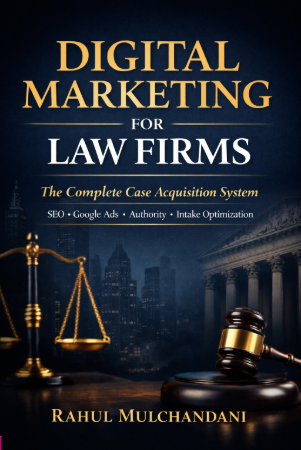
Author of "Digital Marketing For Lawyers" Book
Written by: Rahul Mulchandani
Founder, Digital Marketing Strategist and Author of "Digital Marketing For Lawyers" Book
Table of Contents
Legal content writing for law firms demands precision, authority, and strict compliance. Every piece must satisfy Google’s 2026 Helpful Content system while demonstrating Experience, Expertise, Authoritativeness, and Trustworthiness (E-E-A-T). Unlike generic business content, legal writing balances educational value with ethical advertising rules under state bar guidelines—never creating unjustified expectations or implying guarantees.
Analyze this Legal content writing for law firms content with AI tools:
ChatGPT Perplexity Grok Google AI Claudeirms that treat content as a checkbox produce thin, AI-generated pages that lose visibility after core updates. Those that invest in attorney-reviewed, client-centered writing build topical authority, earn AI Overview citations, and convert visitors into retained clients. This guide gives managing partners and marketing directors the exact framework used by firms dominating search in competitive markets: from keyword-driven briefs to publication workflows that scale without risking disciplinary action.
What Is Legal Content Writing for Law Firms?
Legal content writing produces website pages, blog posts, guides, FAQs, and resources that educate potential clients while showcasing a firm’s substantive knowledge. It covers practice-area explanations, process breakdowns, recent case law implications, and client-focused answers to high-intent questions such as “What happens after a car accident in [city]?” or “How does divorce affect retirement accounts in [state]?”
The core difference from general content writing lies in dual accountability: to the reader seeking clarity and to regulators enforcing advertising ethics. Content must avoid disclaimers that feel like afterthoughts and instead integrate them naturally. It prioritizes plain English explanations of complex statutes or procedures without offering specific legal advice.
Why Legal Content Writing Matters in 2026
Google’s December 2025 Core Update intensified scrutiny on “experience dilution”—content that covers topics superficially without genuine practitioner insight. Legal queries fall under heightened YMYL (Your Money or Your Life) standards, where weak E-E-A-T signals trigger demotions even if technically optimized.
Firms with strong legal content writing see sustained organic traffic and higher conversion rates on practice-area pages because clients research extensively before contacting a lawyer. One mid-sized personal injury firm replaced templated AI drafts with attorney-edited guides; within 90 days, featured snippets and AI Overview citations increased 40%, directly correlating to a 28% rise in form submissions from educational pages.
Content also supports broader marketing: repurposed blog sections fuel email newsletters, GBP posts, and video scripts while reinforcing brand authority across search and social.
E-E-A-T Requirements for Legal Content
Google’s Search Quality Evaluator Guidelines emphasize E-E-A-T as signals, not direct ranking factors, but they heavily influence visibility in competitive legal verticals.
- Experience: Demonstrate first-hand knowledge. Include specific, anonymized case scenarios or procedural details only an active practitioner would know, such as “In [state] courts, judges now routinely require parties to attempt mediation before setting trial dates in contested custody matters.”
- Expertise: Attribute content to licensed attorneys. Place a clear byline with bar number, years of practice, and relevant credentials at the top or bottom. Link to the attorney’s bio page containing verified education and bar admissions.
- Authoritativeness: Cite primary sources—statutes, recent appellate decisions, or official government resources—rather than secondary blogs. Reference tools like state court dockets or legislative trackers for timeliness.
- Trustworthiness: Use transparent disclaimers (“This article provides general information and does not create an attorney-client relationship”), accurate contact details, and trust signals such as bar association memberships or AV Preeminent ratings.
A realistic scenario: A family law firm published a 2,500-word guide on asset division. The version that ranked featured direct quotes from the lead attorney on recent local bench trends plus hyperlinks to the state code. The AI-rewritten competitor version lacked these markers and dropped out of top positions after the December 2025 update.
Get More Clients for Your Law Firm
Stop losing potential cases to competitors. Let’s build a strategy that brings you consistent, high-quality leads.
Developing a Legal Content Strategy and Topic Clusters
Start with client intent mapping. Segment queries into informational (early research) and transactional (ready-to-hire) buckets. Personal injury searches often begin with “statute of limitations [state]” and progress to “best car accident lawyer near me.”
Build topic clusters around core practice areas. A pillar page on “Divorce in [State]” links to supporting content: child custody factors, alimony calculations, property division checklists, and mediation vs. litigation comparisons. Use Semrush’s Topic Research tool or Ahrefs’ Content Explorer to identify content gaps—specifically, questions competitors answer incompletely.
Aim for 4–6 new pieces monthly per major practice area, mixing evergreen guides with timely commentary on new legislation. Track cluster performance in Google Analytics 4 by grouping URLs under practice-area segments to measure assisted conversions.
The Legal Content Writing Process: Step-by-Step
- Keyword and Intent Research: Use Google Keyword Planner for volume and Ahrefs or Semrush for difficulty and SERP features. Filter for legal-specific modifiers like “[practice area] explained,” “[state] law changes 2026,” or “what to expect when [legal event].”
- Create a Content Brief: Specify target keyword, secondary terms, word count (1,500–4,000 for pillars), required sections, attorney reviewer, primary sources, and mandatory disclaimers. Note exact local nuances if multi-location.
- Research and Outline: Pull statutes, recent cases, and procedural timelines. Structure with H2/H3 headings that mirror searcher questions. Lead with the direct answer in the first 100–150 words.
- Draft with Attorney Input: Writers produce the initial draft in plain language. The responsible attorney adds proprietary insights—courtroom realities, common pitfalls, or updated filing requirements—that generic research cannot replicate.
- Review for Accuracy and Compliance: Legal team checks facts and ethics. Marketing verifies SEO elements and readability (Flesch score above 60 for client-facing pieces).
- Optimize and Publish: Add schema (FAQPage for question sections, Article for bylines), internal links, and high-quality images with descriptive alt text. Schedule via WordPress or a legal-specific CMS with version control.
Promote and Update: Share via email lists and GBP. Revisit annually or after major law changes using Google Search Console “Not provided” queries and performance data.
Ethical and Bar Compliance in Legal Content
State bars enforce rules modeled on ABA Model Rule 7.1: communications must not be false or misleading. Avoid phrases implying guaranteed results (“We win every case”) or creating unjustified expectations. Testimonials require client consent and must reflect actual outcomes without cherry-picking.
Case studies need anonymization or explicit permission. Include prominent disclaimers on every page stating the content offers general information only. Never give individualized advice in public content—route those questions to intake forms.
A common violation occurs when firms publish “success stories” without context; one firm received a bar inquiry after a blog post implied superior results based on settlement amounts alone. Solution: Focus on process education and use aggregated or hypothetical scenarios reviewed by ethics counsel.
Optimizing Legal Content for Search and AI Overviews
Structure for both traditional rankings and Generative Engine Optimization (GEO). Use short paragraphs, bullet points, numbered steps, and tables for comparisons. Place key answers early. Implement structured data: FAQPage schema for question sections and LegalService schema on practice pages.
For AI Overviews, create citation-worthy content with clear authorship, statistics from verifiable sources, and unique practitioner perspectives. Tools like Semrush’s AI Visibility tracker monitor which pages earn mentions in generative results.
Monitor Core Web Vitals—pages must load fast on mobile—and ensure accessibility compliance for broader E-E-A-T signals.
Tools, Workflows, and Common Mistakes
Essential tools include:
- Semrush or Ahrefs: For keyword gaps, content audits, and topical authority scoring.
- Google Search Console: To identify impressions for long-tail legal queries.
- Grammarly or Surfer SEO: For readability and optimization, but never as a substitute for attorney review.
- BrightLocal or similar: For local content alignment in multi-office firms.
Common mistakes:
- Publishing pure AI output without human expertise—flagged under experience dilution.
- Keyword stuffing or generic templates that ignore jurisdiction-specific rules.
- Neglecting updates after law changes, causing outdated information that erodes trust.
- Failing to attribute content to specific attorneys, weakening author signals.
One mid-market estate planning firm used AI for first drafts but required every piece to include the drafting attorney’s real-world filing examples; their cluster pages maintained rankings while pure-AI competitors declined.
Next Steps: Launch Your Legal Content System
Audit your top 10 practice-area pages this week using Google Search Console and a content gap analysis in Semrush. Identify the weakest piece by traffic and E-E-A-T signals, then assign an attorney to add proprietary insights and update it. Build one new topic cluster brief for your highest-volume practice area. Set a recurring calendar: research Monday, draft Wednesday, legal review Friday. Measure success by organic sessions to content URLs and form fills originating from those pages. Execute consistently, and your legal content writing will compound into measurable case growth.
Frequently Asked Questions
What makes legal content writing different from general content writing for law firms?
Legal content writing requires dual layers of accountability absent in most industries. Every sentence must educate without crossing into legal advice, comply with state bar advertising rules, and demonstrate verifiable E-E-A-T under Google’s guidelines. General content can prioritize engagement or sales; legal writing prioritizes accuracy, plain-language explanations of statutes and procedures, and transparent disclaimers. Attorney involvement is non-negotiable for substantive sections—generic writers cannot accurately describe local court practices or recent procedural shifts. In 2026, post-December Core Update, content lacking first-hand practitioner insight faces demotion even if grammatically perfect. Firms succeed by creating briefs that mandate specific attorney quotes on real-world application, jurisdiction-specific examples, and primary source citations, producing material that builds trust and ranks for both informational and transactional legal queries.
How do you demonstrate E-E-A-T in legal content writing?
Demonstrate E-E-A-T by attaching clear attorney bylines with bar admission details and years of focused practice to every major piece. Early in the article, include the author’s direct experience—such as “Having handled over 200 contested custody matters in [County] Family Court…”—followed by anonymized procedural insights unavailable through public research. Cite statutes, recent appellate decisions, and official resources with live hyperlinks. Add author bio links containing verified credentials, publications, or speaking engagements. Use structured data to mark authorship and publish dates. Google’s Search Quality Evaluator Guidelines reward content showing first-hand experience over synthesized summaries. A practical test: after drafting, ask whether a reader could distinguish this piece from generic competitors solely by the depth of practitioner perspective. Firms that embed these markers consistently see stronger performance in YMYL legal verticals.
What is the ideal workflow for legal content writing in a busy law firm?
The ideal workflow begins with a detailed content brief capturing target keyword, searcher intent, required sections, word count, and mandatory compliance elements. A researcher or writer produces a factually accurate draft using primary sources. The assigned attorney then injects proprietary insights and reviews for substantive accuracy. Marketing or a compliance officer checks tone, disclaimers, and SEO structure. Final approval comes from a senior partner if high-risk topics are involved. Publish, then schedule updates triggered by legislative changes or annual performance reviews in Google Search Console. Use project management tools like ClickUp or Asana with custom fields for “Attorney Reviewer” and “Ethics Clearance.” This process typically takes 10–21 days per piece but scales when firms batch similar topics. Firms skipping attorney review risk both ranking penalties and bar complaints.
How often should law firms publish new legal content?
Publish consistently rather than in volume. Four to six high-quality pieces per month across major practice areas outperform sporadic high-volume posting. Focus on depth: one 3,000-word pillar guide with supporting cluster content generates more sustained traffic than twelve thin 500-word posts. After the 2025–2026 core updates, Google favors sites demonstrating ongoing expertise through timely updates to existing content over new low-value additions. Track performance monthly; refresh pieces showing declining impressions within 12 months or after significant law changes. Use a content calendar tied to court terms, legislative sessions, and seasonal client needs (e.g., tax-related estate planning in Q4). Consistency signals authority to both algorithms and potential clients evaluating long-term counsel.
Can AI tools be used for legal content writing without violating E-E-A-T?
AI tools can accelerate research and first drafts but cannot replace attorney oversight. Use them for outlining structures, generating plain-language explanations of basic concepts, or identifying related questions via tools like Semrush’s AI Content Helper. Every final piece must incorporate original attorney insights, jurisdiction-specific details, and personal experience that current AI models cannot replicate accurately. Google’s December 2025 update specifically targeted “experience dilution” where content lacked genuine practitioner perspective. Firms that run AI output through rigorous attorney editing and add unique case-derived examples maintain compliance and visibility. Pure AI-generated legal content without human expertise fails both Helpful Content standards and bar ethics expectations around accurate client communications.
What ethical rules govern legal content writing for law firms?
ABA Model Rules 7.1–7.3 form the foundation in most jurisdictions: communications must not be false or misleading, cannot create unjustified expectations, and must include disclaimers where necessary. Avoid guarantees, testimonials without consent, or statements implying superior results based on cherry-picked data. Content must clearly state it provides general information and does not form an attorney-client relationship. Protect confidentiality in case studies through anonymization. Many states require prior review of advertising materials; some mandate filing copies with the bar. Consult your jurisdiction’s specific ethics opinions on websites and blogs, as interpretations vary. A single misleading claim in a popular guide can trigger disciplinary proceedings even if the rest of the site complies. Build review by in-house or outside ethics counsel into every publication workflow.
How do you structure legal content for better readability and SEO?
Lead with the direct answer to the primary question within the first 100 words. Use descriptive H2 and H3 headings that match searcher language. Break text into short paragraphs (3–5 sentences maximum), incorporate bullet points for lists or steps, and tables for comparisons such as “Mediation vs. Litigation Costs.” Include internal links to related practice pages and external links to primary legal sources. Optimize images with descriptive alt text containing relevant terms. Add FAQ sections with schema markup for rich results. Target a Flesch-Kincaid readability score above 60 for client audiences. These elements improve dwell time, reduce bounce rates on legal landing pages, and help AI systems extract clear answers for Overviews. Test structure by reading aloud—legal concepts should feel approachable, not intimidating.
What types of legal content perform best for law firms?
Practice-area pillar guides, step-by-step process explainers (“What to Expect at Your First Consultation”), timely commentary on new legislation or rulings, and location-specific FAQs outperform generic blog posts. Client-focused content answering “how” and “what happens next” questions converts better than firm-centric “why choose us” pieces. Long-form authoritative resources (2,000+ words) with attorney bylines and data build topical authority clusters that support multiple ranking pages. Video transcripts or embedded explainer videos add engagement signals. Evergreen content updated annually maintains traffic; timely pieces drive short-term spikes. The strongest performers combine educational depth with subtle calls-to-action tied to intake forms or phone numbers, respecting ethical boundaries.
How do you measure the success of legal content writing efforts?
Track organic sessions and pageviews to content URLs in Google Analytics 4, segmented by practice area. Monitor keyword rankings and impressions in Google Search Console for target terms. Measure conversion metrics: form submissions, phone calls (via call tracking), and assisted conversions from content pages. Use Semrush or Ahrefs to track topical authority growth and backlink acquisition to content assets. For AI visibility, monitor mentions in generative results via specialized trackers. Qualitative signals include time on page (aim for 2+ minutes on in-depth guides) and low bounce rates. Set benchmarks: top-performing legal content typically sees 15–30% of traffic converting to leads over time when paired with strong CTAs. Review quarterly and reallocate resources from underperforming topics.
Should law firms outsource legal content writing or keep it in-house?
Hybrid models deliver the best results. Outsource research and initial drafting to experienced legal writers familiar with SEO and plain-language principles. Keep final substantive editing, insight addition, and compliance review with licensed attorneys. Full in-house works for larger firms with dedicated marketing teams; smaller firms benefit from vetted agencies that understand bar rules. Pure outsourcing without attorney oversight risks accuracy issues and E-E-A-T weaknesses. Evaluate partners by requesting sample pieces with clear attribution and asking how they handle jurisdiction-specific updates. The goal remains content that could only come from your firm’s expertise, not a generic service.
How do you update existing legal content to maintain rankings in 2026?
Schedule annual audits using Google Search Console performance reports and Semrush content audits to flag declining pages. Refresh with new case law, statute changes, or procedural updates. Add fresh attorney insights or recent examples. Update publication dates and notify Google via Search Console resubmission or sitemap ping. Expand thin sections with new subheadings or data. Re-optimize for current SERP features and AI-friendly structure. Content that receives regular maintenance signals ongoing expertise to Google’s systems. Firms that treat content as living documents rather than one-and-done assets preserve rankings through algorithm shifts.
🚀 Get Free Consultation
Our Latest Posts
-
 How We Generate Signed Cases for Lawyers: 7 Proven Strategies That Deliver Real Results
 -
 Case Study: Multi-City Personal Injury SEO Success – New Mexico
 -
 Case Study: Personal Injury Lawyer in Texas
 -
 Lawyer SEO: The Complete Guide to Optimizing Law Firm Websites for Clients and Rankings
 -
 Why Lawyer Switch to Us
Updated on
Get In Touch with Us!
other way to contact us
Office Email
rahul@webkeydigital.com
Office Phone
+1 503-303-8639
Office Location
8 The Green STE A, Dover, Kent , Delaware 19901
