
Retargeting Ads for Lawyers
The 2026 Ultimate Guide

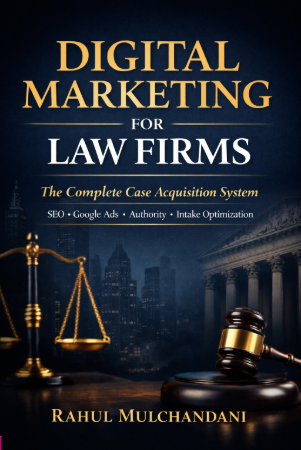
Written by: Rahul Mulchandani
Founder, Digital Marketing Strategist and
Author of "Digital Marketing For Lawyers" Book
Written by: Rahul Mulchandani
Founder, Digital Marketing Strategist and Author of "Digital Marketing For Lawyers" Book
Table of Contents
Retargeting ads for lawyers (also called remarketing) let you reconnect with website visitors who left without contacting your firm. In legal services, where decisions often take days or weeks and average CPCs reach $70–$250+ for competitive terms, these campaigns recapture high-intent prospects who researched your practice area but bounced or compared options.
Analyze this Retargeting ads for lawyers content with AI tools:
ChatGPT Perplexity Grok Google AI ClaudeUnlike cold traffic campaigns that fight for new eyeballs, retargeting serves warm audiences already familiar with your firm. This guide covers exact audience building in Google Ads, RLSA tactics for search, display and video creative strategies tailored to law firms, compliance considerations under state bar rules, and performance benchmarks that experienced legal PPC managers actually achieve.
What Are Retargeting Ads for Lawyers?
Retargeting ads for lawyers use the Google Ads remarketing tag (or Google Analytics 4 events) to place a cookie or use anonymous user data on visitors who reached your site. You then show tailored ads to those users as they browse the Google Display Network, YouTube, Gmail, or even search results via Remarketing Lists for Search Ads (RLSA).

The core mechanism: a visitor lands on your “car accident lawyer” page but doesn’t fill the form or call. They enter a remarketing audience and later see your ad while reading news or watching videos. This keeps your firm top-of-mind during the often extended legal research and decision process.
In 2026, Google’s privacy-focused signals and AI bidding make audience segmentation by page visited, time on site, or specific actions (e.g., viewed contact page) more powerful than ever.
Is Retargeting Worth It for Law Firms in 2026?
Yes—when layered on top of Search campaigns and your site already generates decent traffic (500+ visitors/month). Retargeting routinely lifts overall ROAS by 20–50% because it recaptures the 97% of visitors who bounce without converting.
It shines for practice areas with longer cycles: family law, estate planning, business litigation, and personal injury. These prospects often need multiple touchpoints before hiring.
When it’s not worth it: Low-traffic sites, weak conversion funnels, or budgets under $3,000/month. Privacy changes (iOS updates, cookie deprecation, consent mode v2) have reduced reach, and ad fatigue sets in quickly with poor frequency control.
Bottom line: Retargeting is a high-ROI supporting tactic, not a standalone lead generator. Prioritize fixing your website and Search campaigns first.
Finding the Right Platforms for Legal Retargeting Ads
Not every platform works equally well for lawyers due to ethics rules, sensitive category restrictions, audience behavior, and compliance risk.
| Platform | Best For | Strengths for Lawyers | Weaknesses / Risks | Recommended Budget Share | Compliance Notes |
|---|---|---|---|---|---|
| Google Ads (RLSA + Display + YouTube) | All practice areas, high-intent recapture | Precise segmentation by page visited; RLSA for search recapture; strong video options | Sensitive category limits on PI, divorce, bankruptcy | 50–70% of retargeting budget | Consent Mode v2 required; contextual targeting for sensitive matters |
| Meta (Facebook + Instagram) | Consumer-facing (PI, family, criminal) | Massive reach; excellent visual storytelling and pixel-based retargeting | Heavy ad review on sensitive topics; iOS tracking limitations | 20–30% | Strong disclaimers needed; avoid client data uploads; use Limited Data Use mode |
| Corporate, business litigation, estate planning | Professional audience; strong list-based retargeting from seminars or newsletters | Higher CPM; lower volume for consumer law | 10–20% for B2B practices | Lower ethics risk but still requires bar review | |
| YouTube Video Remarketing | Trust-building in emotional cases | Long-form testimonials and “what to expect” videos | Needs quality video assets; lower direct conversion | 10–15% | Same Google rules; focus on educational content |
Platform selection by practice area:
- Personal Injury / Truck Accidents: Google RLSA + Display first, then YouTube for credibility videos.
- Family Law / Divorce: Meta for broad emotional reach + Google for search retargeting.
- Criminal Defense: Balanced Google + Meta with strict frequency caps.
- Estate Planning / Corporate Law: LinkedIn list-based + Google nurturing.
Recommendation: Start with Google Ads remarketing (pixel + RLSA). It integrates seamlessly with existing Search campaigns and offers better built-in compliance tools. Add Meta or LinkedIn only after Google is profitable and you have counsel-approved creative templates.
Get More Clients for Your Law Firm
Stop losing potential cases to competitors. Let’s build a strategy that brings you consistent, high-quality leads.
Why Retargeting Delivers Strong ROI for Law Firms
Most law firm websites see 70–90% of visitors leave without converting. Retargeting recaptures a portion of this warm traffic at significantly lower CPC than cold campaigns—often 30–60% cheaper because of higher relevance and Quality Score.
Legal buying cycles are rarely instant. A prospective client might research personal injury options over 7–21 days before calling. Retargeting maintains visibility without requiring them to remember your URL. Industry benchmarks show remarketing can improve overall campaign ROAS by 20–50% when layered on top of Search campaigns.
One mid-sized PI firm in a competitive metro added remarketing lists segmented by practice area pages and saw a 28% increase in form submissions from previous visitors within 60 days, with CPL dropping below their Search-only average.
RLSA vs Display Remarketing vs Video: Which to Use
Remarketing Lists for Search Ads (RLSA):Apply your website visitor lists to Search campaigns. Bid higher or adjust ad copy for past visitors searching related terms. Use this for high-intent recapture—e.g., someone who visited your divorce page later searches “custody lawyer near me.” RLSA often delivers the highest conversion rates because users are actively searching again.
Display Remarketing:Shows image or responsive display ads across millions of sites in the Google Display Network. Best for brand reminder and nurturing. Segment lists tightly (e.g., visitors who spent >30 seconds on a truck accident page) to avoid wasting budget on quick bounces.
Video Remarketing: Targets past visitors on YouTube with skippable or non-skippable video ads. Effective for building trust through testimonials or case result explanations, especially in emotionally charged practice areas like family law or serious injury.
Start with RLSA layered on existing Search campaigns for quickest wins, then add Display for volume and Video for deeper engagement. Many firms allocate 15–25% of total PPC budget to retargeting once lists reach 1,000+ users.
How to Build Remarketing Audiences for Law Firms
Create audiences in Google Ads Shared Library → Audience manager.
Recommended segmentation for law firms:
- All website visitors (past 30/180/540 days)
- Practice-area page visitors (e.g., /personal-injury, /divorce, /dui)
- High-intent pages (contact, free consultation, case results)
- Time-on-site or page-depth thresholds (e.g., >60 seconds or 3+ pages)
- Non-converters (visited but no form submission or call tracked)
- Past clients or lead list uploads (for exclusion or loyalty campaigns)
Use Google Analytics 4 events for advanced lists (e.g., “viewed intake form” or “clicked phone number”). Combine with customer match lists from your CRM for stronger signals.
Avoid overly broad “all visitors” lists—segmentation by practice area prevents showing a PI ad to someone who only read your estate planning page, which hurts relevance and can raise compliance risks.
Step-by-Step Setup of Retargeting Campaigns in Google Ads
- Install the remarketing tag: Use Google Tag Manager or the Google Ads tag. Verify with the Tag Assistant. For GA4 users, enable enhanced conversions and link to Google Ads.
- Build audiences: In Audience manager, create lists with membership duration (30 days for urgent PI, 90–180 for family/estate). Set minimum list size thresholds (1,000 for Display, smaller for RLSA).
- Create the campaign: For RLSA, add lists to existing Search campaigns via bid adjustments (+20–100% for past visitors). For Display/Video, create dedicated campaigns with “Remarketing” as the targeting method.
- Set bidding and budget: Start with Maximize Conversions or Target CPA. Allocate separate daily budgets (10–20% of total PPC spend initially). Use frequency capping (3–5 impressions per user per week) to avoid ad fatigue.
Launch and monitor: Use observation mode first on Search campaigns before switching to targeting only. Check the Audience report for reach and performance.
Ad Creative and Messaging Strategies That Convert Legal Prospects
Tailor messaging to the audience’s journey stage. For recent visitors to a specific page, use direct CTAs: “Still dealing with your car accident? Get the compensation you deserve—free consultation today.” Include trust signals like bar association badges, “5-Star Reviews,” or anonymized case results.
For longer-duration lists, focus on education and reassurance: video testimonials, “What to expect when hiring a [practice area] lawyer,” or “Common mistakes after a [incident] that cost clients thousands.”
Use responsive display ads with multiple headlines and images. Test variations highlighting urgency for PI/criminal and empathy/trust for family/estate planning. Always link to practice-area-specific landing pages with clear intake forms and prominent phone numbers tracked via CallRail or similar.
Compliance, Privacy, and Ethics Rules for Retargeting Ads
State bar rules (modeled on ABA Model Rules 7.1–7.3) require truthful, non-misleading ads with no guarantees. Retargeting copy must match what your firm actually offers—never imply results or use sensational language that could mislead.
Google has sensitive category restrictions; certain practice areas (personal injury, divorce, bankruptcy) face limitations on personalized advertising due to privacy policies. Use contextual or non-personalized remarketing where required, and avoid uploading sensitive customer data without proper consent.
Always disclose if using cookies or tracking. Review every ad variation with firm counsel before launch. In 2026, with stricter privacy signals (consent mode v2 in Google Tag Manager), test audience performance with and without personalized ads.
Tracking, Optimization, and Scaling Retargeting Performance
Track beyond clicks: form submissions, phone calls (via call tracking), and ultimately signed cases in your CRM. Import offline conversions into Google Ads for accurate bidding.
Key metrics: CTR (target 0.5–2% for Display, higher for RLSA), conversion rate (aim 5–15% from warm traffic), CPL (often 40–60% lower than cold Search), and ROAS.
Optimize weekly: pause underperforming creatives, refine audience segments (e.g., exclude recent converters), and expand successful lists. Scale by increasing frequency caps or adding similar audiences once you have 30+ conversions per campaign.
Next Steps: Launch Your First Retargeting Campaign Today
Open Google Ads, verify your remarketing tag is firing on all key pages, and build at least three audiences: all visitors (30 days), practice-area page visitors, and high-intent non-converters. Add RLSA bid adjustments to your top Search campaigns today, then create a small-budget Display remarketing campaign with practice-area segmented lists. Review performance after 14 days, refine messaging based on Search Terms and Audience reports, and expand winners. Firms that integrate retargeting as a core layer on top of Search consistently see higher overall lead volume and better ROI than those relying on cold traffic alone.
Frequently Asked Questions
Are retargeting ads worth it for law firms?
Yes, when you have at least 500 monthly website visitors and already run Search campaigns. Retargeting recaptures the 97% who bounce and lifts overall ROAS by 20–50% at 30–60% lower CPL than cold traffic. It works best for longer-cycle practices like family law or estate planning. Skip it if your site is weak or traffic is very low.
Is retargeting ethical for lawyers?
Yes—if ads are truthful, include disclaimers (“Past results do not guarantee future outcomes”), and stay relevant to the visitor’s interest. Follow ABA Rules 7.1–7.3 and your state bar guidelines. Never guarantee results or use client data. Use consent mode v2 and get counsel review on every creative.
What platforms work best for law firm retargeting?
Google Ads (Display, RLSA, YouTube) for search-intent recapture, Meta (Facebook/Instagram) for broad reach, and LinkedIn for corporate or business law. Start with Google pixel-based remarketing, then add list-based on Meta or LinkedIn as your lists grow.
How do I set up retargeting in Google Ads?
Install the remarketing tag via Google Tag Manager, build segmented audiences in Audience manager, add RLSA bid adjustments to Search campaigns, and create a Display campaign with frequency capping. Start small (10–20% of budget) and test for 14 days.
How often should I refresh retargeting ads?
Every 4–6 weeks. Refresh creative with new angles (testimonials, guides, free consult reminders) to prevent ad fatigue and maintain engagement.
What frequency cap should I use for law firm retargeting?
3–5 impressions per user per week. Higher caps annoy prospects and hurt brand perception; lower caps waste potential impressions.
Should I use pixel-based or list-based retargeting?
Pixel-based for website visitors (fastest setup). List-based for CRM or email uploads (stronger for B2B or seminar follow-up). Most firms run both.
Can retargeting lower my CPL?
Yes—typically 40–60% lower than cold Search because the audience is already warm. Track with imported offline conversions for accurate measurement.
How do I stay compliant with privacy rules?
Enable consent mode v2, never upload sensitive client data, use only contextual targeting where required, and review state bar opinions (especially Florida and New York).
What is the difference between RLSA and display remarketing for lawyers?
RLSA (Remarketing Lists for Search Ads) applies your website visitor lists to Google Search campaigns, allowing bid adjustments or custom ad copy when past visitors search again. It delivers high-intent traffic because users are actively searching. Display remarketing shows image or responsive ads across the Google Display Network to the same audiences while they browse other sites or watch YouTube. RLSA usually achieves higher conversion rates due to search intent, while Display excels at brand reminder and nurturing during longer research phases. Use RLSA for quick recapture on Search and Display for volume and visual storytelling (testimonials, case results). Video remarketing on YouTube sits between them for trust-building. Most successful law firm setups combine both, starting with RLSA on existing Search campaigns for fastest ROI.
How do I build effective remarketing audiences for a law firm?
In Google Ads Audience manager, create lists based on website behavior: all visitors (30/180 days), specific practice-area page visitors (/personal-injury, /divorce), high-intent pages (contact or consultation forms), time on site (>60 seconds), or non-converters (no tracked call or form). Use GA4 events for precision, such as “viewed intake form” or “clicked phone number.” Set membership durations shorter for urgent matters (30 days for PI) and longer for others (90–180 days for estate planning). Segment by practice area to avoid irrelevant ads—showing a DUI ad to an estate planning visitor hurts relevance and risks compliance issues. Exclude recent converters or past clients if appropriate. Aim for lists of at least 1,000 users for Display; smaller lists work for RLSA. Regularly review Audience insights to refine segments.
Can retargeting ads for lawyers improve Quality Score and lower CPL?
Yes—retargeting audiences are inherently more relevant, leading to higher CTR and better post-click engagement signals that boost Quality Score. Higher Quality Scores reduce actual CPC, often by 20–40% compared to cold traffic. Because these users already visited your site, conversion rates from retargeted clicks frequently reach 5–15%, driving down cost-per-lead significantly (many firms report 40–60% lower CPL than Search-only). Cleaner data also helps Google’s AI bidding strategies optimize faster. Track everything through GA4 and call tracking imports to attribute signed cases accurately. Combine with strong landing page alignment for maximum effect.
What common mistakes do law firms make with retargeting ads?
Common errors include using one broad “all visitors” list instead of segmenting by practice area, resulting in irrelevant ads and wasted spend. Failing to frequency cap leads to ad fatigue and negative brand perception. Ignoring compliance reviews risks bar complaints or Google disapprovals. Launching without proper tag verification or consent mode causes tracking gaps. Not linking offline conversions means bidding optimizes for clicks instead of actual cases. Over-reliance on Display without RLSA misses high-intent search recapture. Many firms also neglect creative testing or use generic messaging instead of tailoring to the visitor’s prior page. These mistakes inflate CPL and reduce overall PPC efficiency.
How much budget should law firms allocate to retargeting ads?
Start with 10–20% of total Google Ads budget once remarketing lists reach sufficient size (1,000+ users). Mature accounts often scale to 15–30% as performance proves out, because retargeting typically delivers lower CPL and higher ROAS than cold traffic. In competitive markets, allocate more to RLSA for Search recapture and less to broad Display. Test with a small dedicated budget first, then expand based on 30-day data. High-volume PI firms may run larger remarketing budgets due to longer research cycles, while estate planning practices benefit from nurturing-focused spend. Re-evaluate allocation quarterly using attribution reports.
How quickly can law firms expect results from retargeting ads?
You can see initial impressions and clicks within days of launching once lists populate. Meaningful conversion lifts typically appear within 14–30 days as algorithms learn and frequency builds. Full ROI often materializes in 45–90 days once you refine audiences and creatives based on real data. Legal sales cycles delay revenue recognition, so track leading indicators like form submissions and calls first, then signed cases. Firms that segment tightly and test messaging see faster results than those using generic setups. Combine with strong Search campaigns for the best synergy—retargeting accelerates overall funnel performance rather than replacing cold acquisition.
🚀 Get Free Consultation
Our Latest Posts
-
 How We Generate Signed Cases for Lawyers: 7 Proven Strategies That Deliver Real Results
 -
 Case Study: Multi-City Personal Injury SEO Success – New Mexico
 -
 Case Study: Personal Injury Lawyer in Texas
 -
 Lawyer SEO: The Complete Guide to Optimizing Law Firm Websites for Clients and Rankings
 -
 Why Lawyer Switch to Us
Updated on
Get In Touch with Us!
other way to contact us
Office Email
rahul@webkeydigital.com
Office Phone
+1 503-303-8639
Office Location
8 The Green STE A, Dover, Kent , Delaware 19901
